
Colours in Spanish: the words and how to use them
November 15, 2026 · Updated November 18, 2026

Colours are some of the first describing words you'll use in Spanish: clothes, cars, food, the sky. The words are easy; where they go and how they change is where learners slip.
The colours
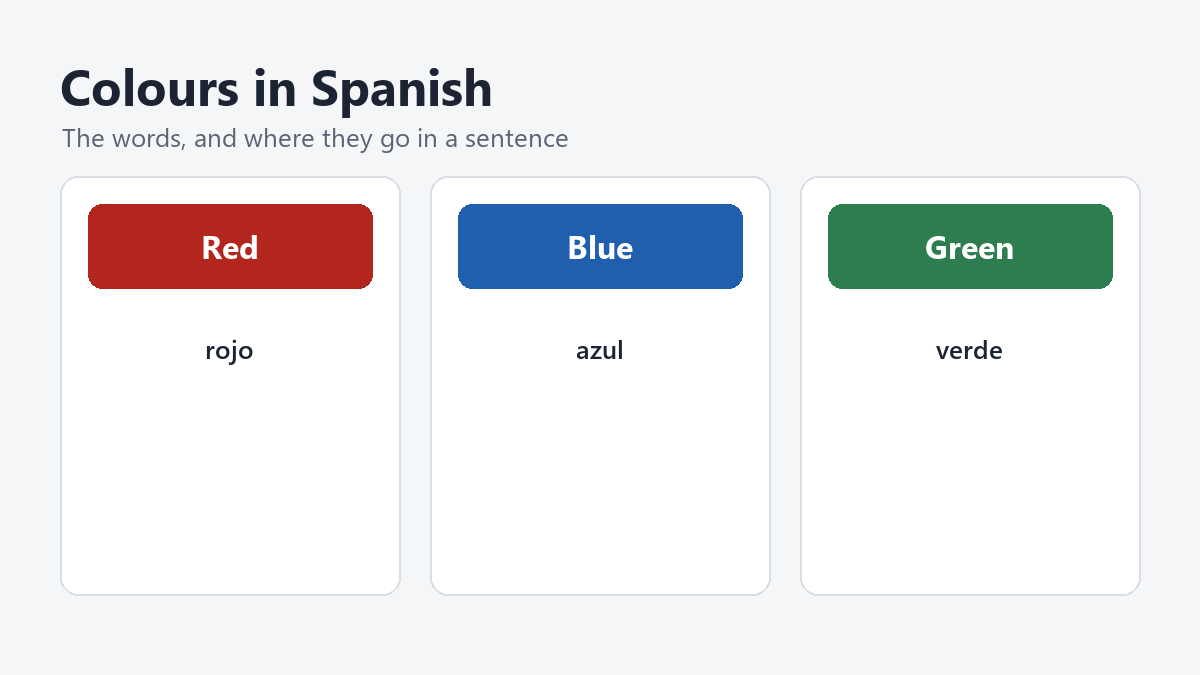
| English | Spanish |
|---|---|
| red | rojo |
| orange | naranja |
| yellow | amarillo |
| green | verde |
| blue | azul |
| purple | morado |
| pink | rosa |
| brown | marrón (Mexico: café) |
| black | negro |
| white | blanco |
| grey | gris |
How to use them
- Colours go after the noun: un coche rojo (a red car).
- Most agree in gender and number: rojo, roja, rojos, rojas. Colours ending in -e or a consonant only change for plural: verde, verdes; azul, azules.
- Naranja and rosa are often left unchanged: camisas rosa.
- Light and dark: azul claro (light blue), verde oscuro (dark green).
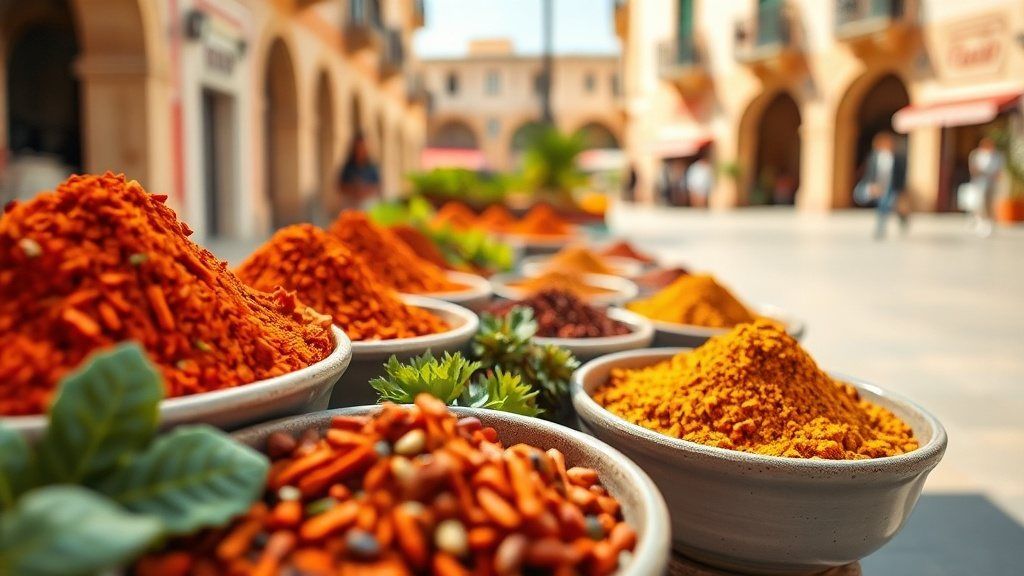
Example: La camisa azul: The blue shirt.
Practise
Describe what you're wearing right now in Spanish, out loud. Then ask FluentSprout's tutor in Talk to play a shop assistant and buy a shirt in a colour you choose: it'll correct the word order and endings as you go.
More Spanish: numbers, days and months and introduce yourself.
Browse the Spanish lessons or start free on FluentSprout.