
How to introduce yourself in French
November 15, 2026 · Updated November 18, 2026

The first real conversation you'll have in French is almost always the same: who you are, where you're from and why you're learning. Learn this one script well and you'll handle it confidently, every time.
The script
| French | English |
|---|---|
| Bonjour ! | Hello! |
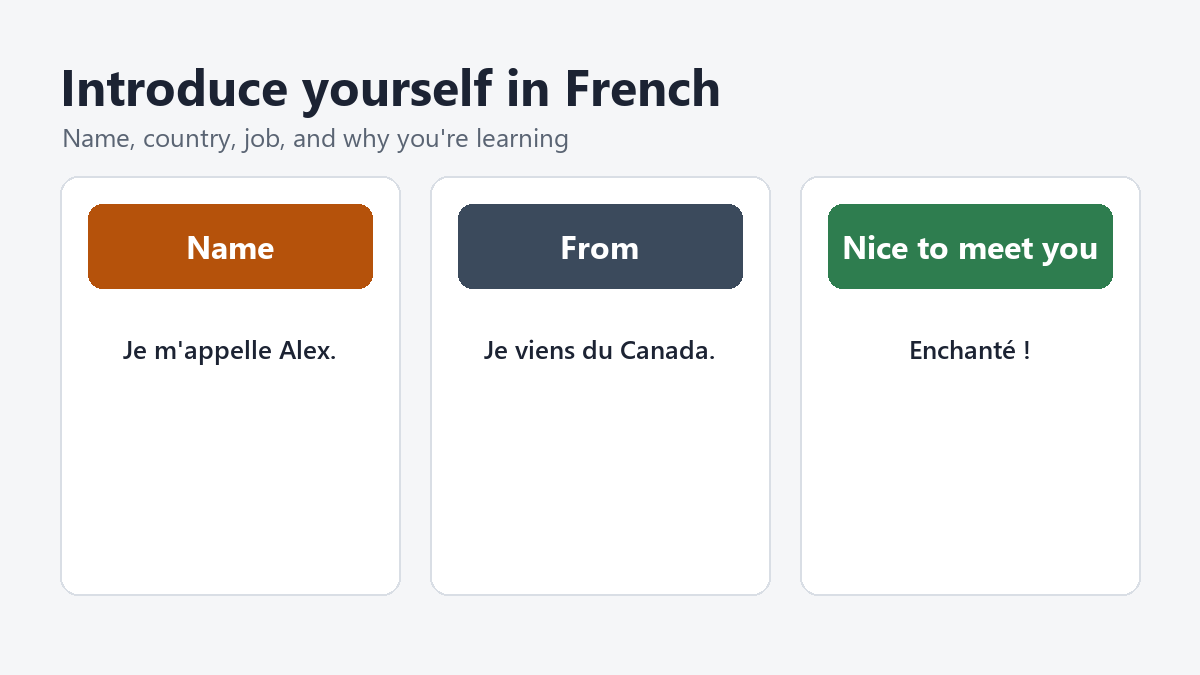
| Je m'appelle Alex. | My name is Alex. |
| Je viens du Canada. | I'm from Canada. |
| J'habite à Toronto. | I live in Toronto. |
| Je suis ingénieur / ingénieure. | I work as an engineer. |
| J'apprends le français. | I'm learning French. |
| Je parle anglais et un peu français. | I speak English and a little French. |
| Enchanté ! / Enchantée ! | Nice to meet you! |
| Et vous ? Comment vous appelez-vous ? | And you? What's your name? |
Swap in your own name, country, city and job. Ask the tutor how to say your job if it isn't here.
What to know
- No article before a job: je suis ingénieur, not je suis un ingénieur.
- Countries take du, de la or des after venir: je viens du Canada, de la France, des États-Unis.
- Enchanté is written with an extra e (enchantée) when a woman says it, but sounds the same.
- With people your age in a relaxed setting, switch to tu: Et toi ? Tu t'appelles comment ?

Make it sound natural
- Say it out loud until it flows. A self-introduction should come out without thinking, so the other person's reply is what you focus on.
- Prepare for the follow-ups: Why are you learning? How long have you been learning? Do you like it here?
- Rehearse the real thing. In FluentSprout's Talk, ask the tutor to play someone you've just met. It replies, asks follow-ups and corrects every sentence: what you said, how to say it, and what you meant.

More French: numbers, days and months and travel phrases.
Browse the French lessons or start free on FluentSprout.