
How to introduce yourself in Japanese
November 15, 2026 · Updated November 18, 2026

The first real conversation you'll have in Japanese is almost always the same: who you are, where you're from and why you're learning. Learn this one script well and you'll handle it confidently, every time.
The script
| Japanese | Say it | English |
|---|---|---|
| はじめまして。 | hajimemashite. | Hello! |
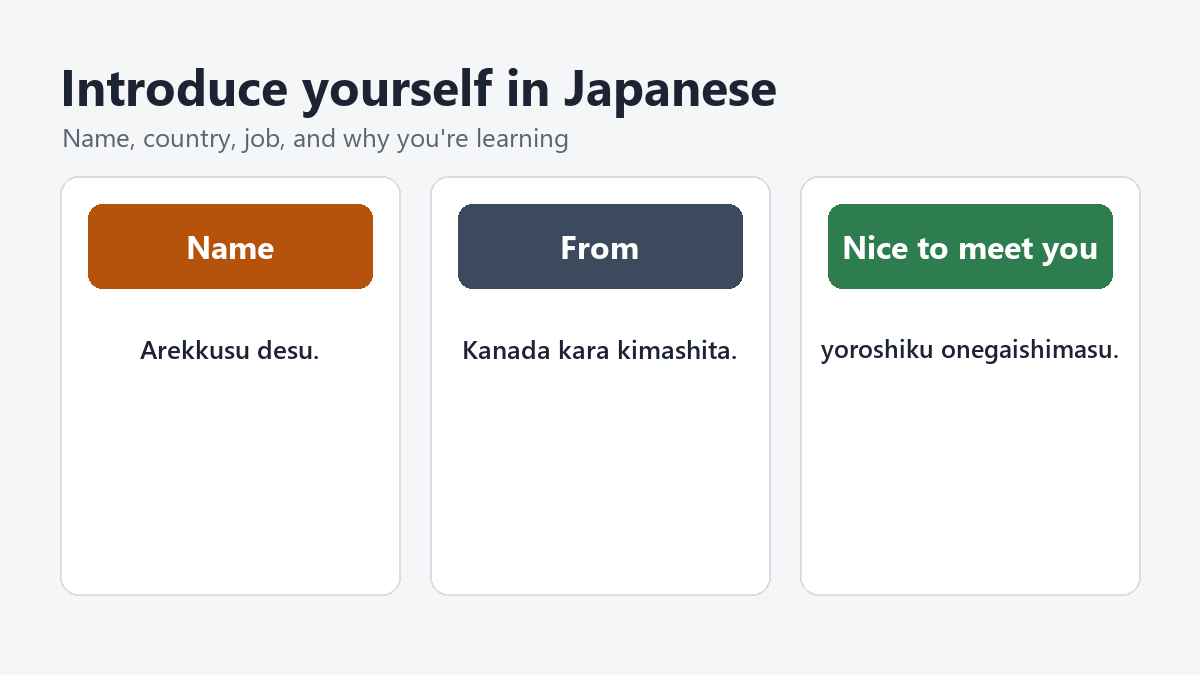
| アレックスです。 | Arekkusu desu. | My name is Alex. |
| カナダから来ました。 | Kanada kara kimashita. | I'm from Canada. |
| トロントに住んでいます。 | Toronto ni sunde imasu. | I live in Toronto. |
| エンジニアです。 | enjinia desu. | I work as an engineer. |
| 日本語を勉強しています。 | nihongo o benkyou shite imasu. | I'm learning Japanese. |
| 英語と、日本語を少し話します。 | eigo to, nihongo o sukoshi hanashimasu. | I speak English and a little Japanese. |
| よろしくお願いします。 | yoroshiku onegaishimasu. | Nice to meet you! |
| お名前は? | onamae wa? | And you? What's your name? |
Swap in your own name, country, city and job. Ask the tutor how to say your job if it isn't here.
What to know
- Hajimemashite ("it's the first time") opens a self-introduction; yoroshiku onegaishimasu closes it. It has no exact English equivalent: roughly "please treat me well".
- Your name is written in katakana if it's not Japanese: Alex becomes アレックス.
- Never add -san to your own name, only to other people's.
- A short bow goes with hajimemashite and yoroshiku.
Make it sound natural
- Say it out loud until it flows. A self-introduction should come out without thinking, so the other person's reply is what you focus on.
- Prepare for the follow-ups: Why are you learning? How long have you been learning? Do you like it here?
- Rehearse the real thing. In FluentSprout's Talk, ask the tutor to play someone you've just met. It replies, asks follow-ups and corrects every sentence: what you said, how to say it, and what you meant.

More Japanese: numbers, days and months and travel phrases.
Browse the Japanese lessons or start free on FluentSprout.