
How to introduce yourself in Korean
November 15, 2026 · Updated November 18, 2026

The first real conversation you'll have in Korean is almost always the same: who you are, where you're from and why you're learning. Learn this one script well and you'll handle it confidently, every time.
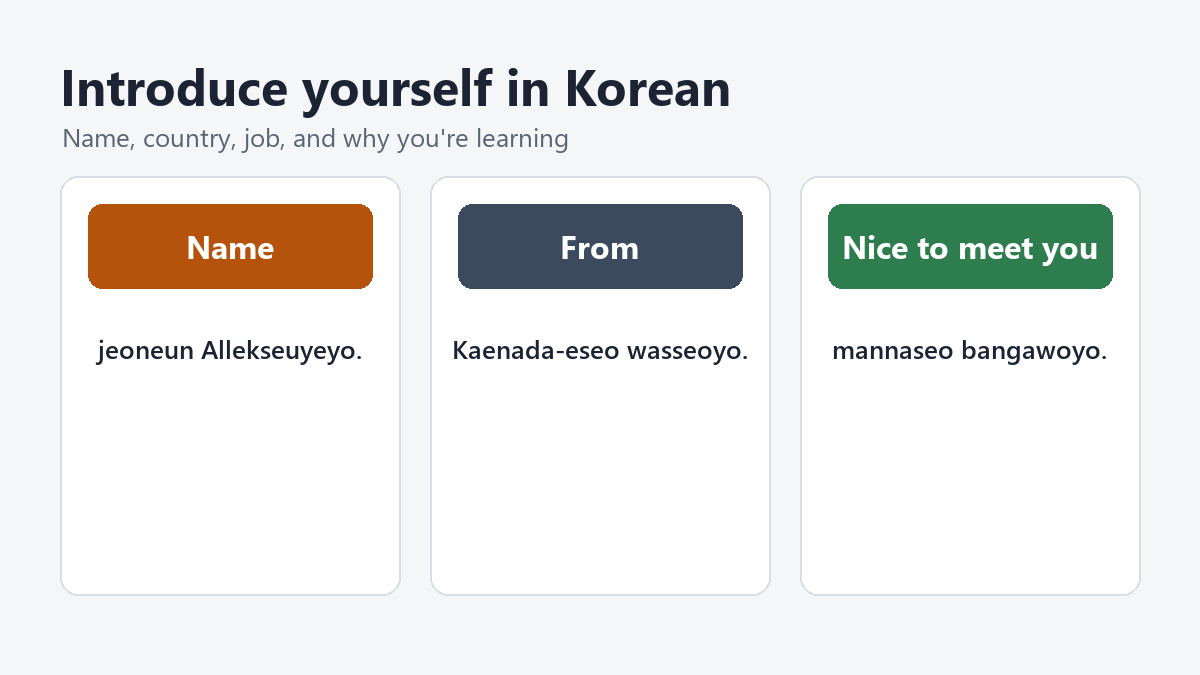
The script
| Korean | Say it | English |
|---|---|---|
| 안녕하세요. | annyeonghaseyo. | Hello! |
| 저는 알렉스예요. | jeoneun Allekseuyeyo. | My name is Alex. |
| 캐나다에서 왔어요. | Kaenada-eseo wasseoyo. | I'm from Canada. |
| 토론토에 살아요. | Toronto-e sarayo. | I live in Toronto. |
| 엔지니어예요. | enjinieoyeyo. | I work as an engineer. |
| 한국어를 배우고 있어요. | hangugeoreul baeugo isseoyo. | I'm learning Korean. |
| 영어하고 한국어를 조금 해요. | yeong-eohago hangugeoreul jogeum haeyo. | I speak English and a little Korean. |
| 만나서 반가워요. | mannaseo bangawoyo. | Nice to meet you! |
| 성함이 어떻게 되세요? | seonghami eotteoke doeseyo? | And you? What's your name? |
Swap in your own name, country, city and job. Ask the tutor how to say your job if it isn't here.
What to know
- Jeoneun ("as for me") is the humble "I" used with people you've just met.
- Seonghami eotteoke doeseyo? is the polite way to ask a name; with friends' friends, ireumi mwoyeyo? is fine.
- Foreign names are written in Hangul by sound: Alex becomes 알렉스.
- In formal settings, mannaseo bangapseumnida is the more formal form of "nice to meet you".

Make it sound natural
- Say it out loud until it flows. A self-introduction should come out without thinking, so the other person's reply is what you focus on.
- Prepare for the follow-ups: Why are you learning? How long have you been learning? Do you like it here?
- Rehearse the real thing. In FluentSprout's Talk, ask the tutor to play someone you've just met. It replies, asks follow-ups and corrects every sentence: what you said, how to say it, and what you meant.

More Korean: numbers, days and months and travel phrases.
Browse the Korean lessons or start free on FluentSprout.