
How to introduce yourself in Turkish
November 15, 2026 · Updated November 18, 2026

The first real conversation you'll have in Turkish is almost always the same: who you are, where you're from and why you're learning. Learn this one script well and you'll handle it confidently, every time.
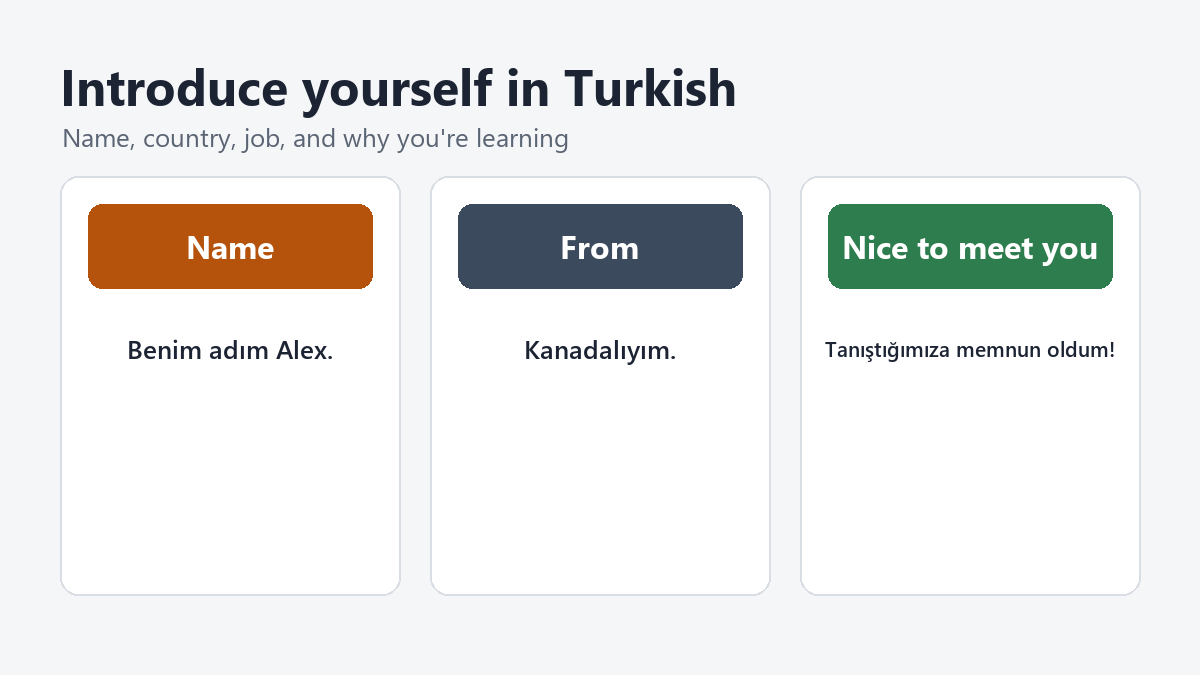
The script
| Turkish | English |
|---|---|
| Merhaba! | Hello! |
| Benim adım Alex. | My name is Alex. |
| Kanadalıyım. | I'm from Canada. |
| Toronto'da yaşıyorum. | I live in Toronto. |
| Mühendisim. | I work as an engineer. |
| Türkçe öğreniyorum. | I'm learning Turkish. |
| İngilizce ve biraz Türkçe konuşuyorum. | I speak English and a little Turkish. |
| Tanıştığımıza memnun oldum! | Nice to meet you! |
| Ya siz? Adınız ne? | And you? What's your name? |
Swap in your own name, country, city and job. Ask the tutor how to say your job if it isn't here.
What to know
- Turkish sticks "I am" onto the word as a suffix: mühendis + -im = mühendisim (I'm an engineer), Kanadalı + -yım = Kanadalıyım (I'm Canadian).
- Suffixes follow vowel harmony, so they change shape: -ım, -im, -um, -üm.
- Siz is polite or plural; sen is for friends: Ya sen? Adın ne?
- An apostrophe separates a proper name from its suffix: Toronto'da (in Toronto).

Make it sound natural
- Say it out loud until it flows. A self-introduction should come out without thinking, so the other person's reply is what you focus on.
- Prepare for the follow-ups: Why are you learning? How long have you been learning? Do you like it here?
- Rehearse the real thing. In FluentSprout's Talk, ask the tutor to play someone you've just met. It replies, asks follow-ups and corrects every sentence: what you said, how to say it, and what you meant.

More Turkish: numbers, days and months and travel phrases.