Reading Japanese and Korean before you know the script
November 18, 2026 · Updated November 18, 2026

Learning Japanese or Korean means learning a new script as well as new words. If you wait until you can read before you start, you lose weeks. If you lean on romanised spelling for ever, you never learn to read.
One line, reading in brackets
FluentSprout shows the reading in brackets right after the sentence, on the same line:
- 他のサイズは? (hoka no saizu wa?) "Do you have other sizes?"
- 감사합니다 (gamsahamnida) "Thank you"
You see the real script every time, and the reading is there when you need it. Over time your eye goes to the script first and the brackets become a check, not a crutch.
Choose when readings show
In Settings you can pick:

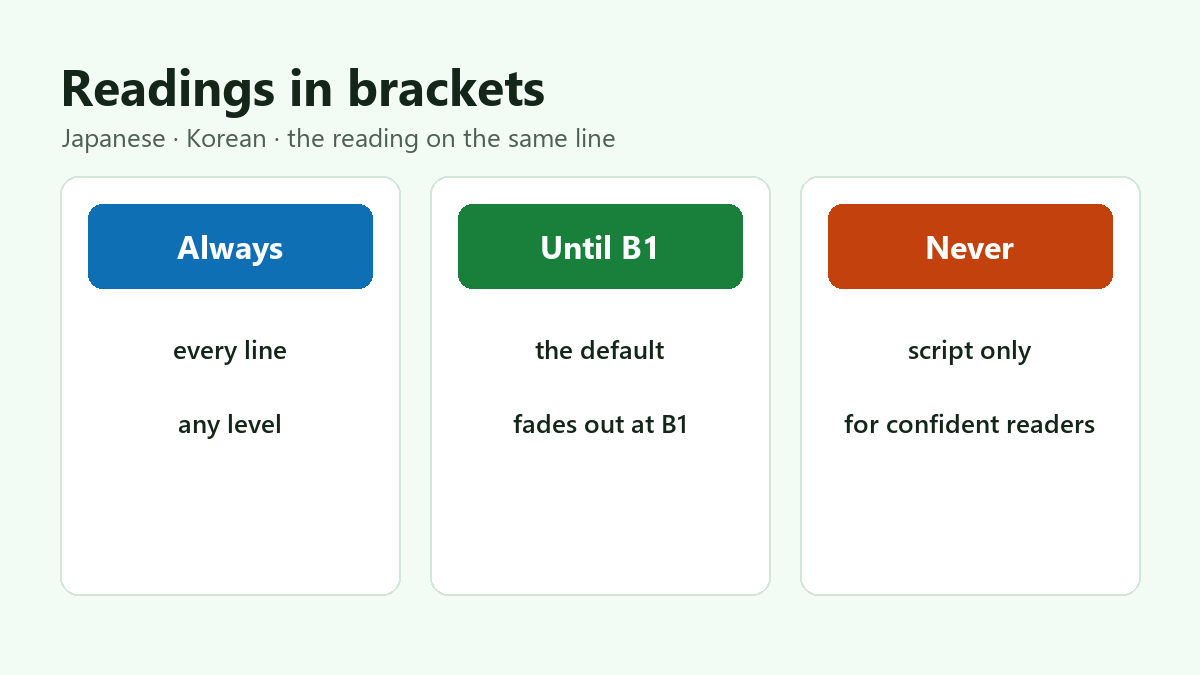
- Always: readings on every line, at any level.
- Until B1 (the default): readings show while you're a beginner and step back once you reach B1.
- Never: script only, for confident readers.
Learn the script alongside
Readings help you start speaking and listening on day one. Pair them with a few minutes of kana or Hangul practice a day and you'll find yourself reading before the brackets disappear.