
How to set a language study pace you can keep
November 18, 2026 · Updated November 18, 2026

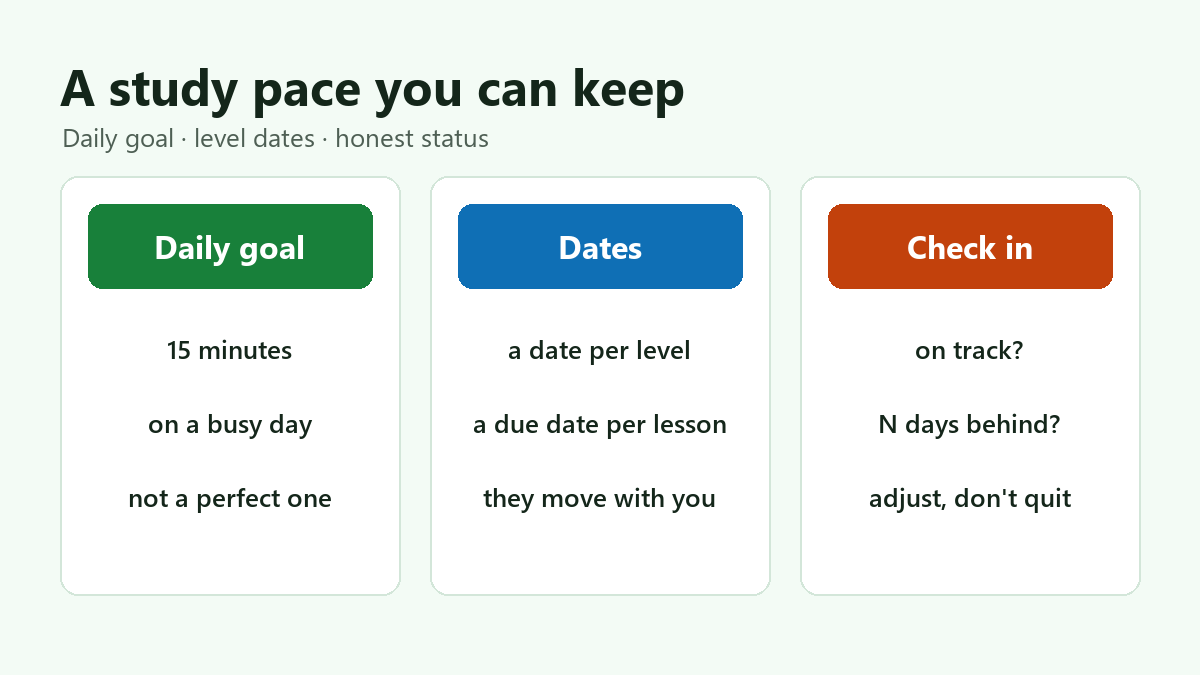
Most language plans fail the same way: an ambitious start, a busy week, and then no idea how far behind you are. A pace you can keep beats a pace that looks good on day one.
1. Pick a daily goal for a busy day
Choose the number of minutes you can manage on your worst normal day, not your best one. Fifteen minutes every day adds up to more than an hour now and then. You can always do more; the goal is the floor.
2. Give every level a date
A level without a date is a wish. Once you know your daily minutes, you can work out roughly when you'll finish A1, A2 and B1, and each lesson gets a "by" date too. If you're preparing for an exam, work backwards from the exam date and check the daily goal is realistic.

3. Check honestly, then adjust
Once a week, look at where you are against the dates. Two days behind is normal; it just means a slightly longer session or a later date. What matters is that you know, so you can adjust instead of giving up.

How FluentSprout does it
Your course on FluentSprout is a timeline. Learn shows the day you started and the daily goal you set, every level has its planned dates, and each lesson says when it's due ("by 19 Nov") or when you finished it. If you fall behind, it says how many days; when you catch up, it says you're on track. Change your daily goal and the dates move with you.