
Jobs where a second language beats AI (and how to get them)
November 18, 2026 · Updated November 18, 2026

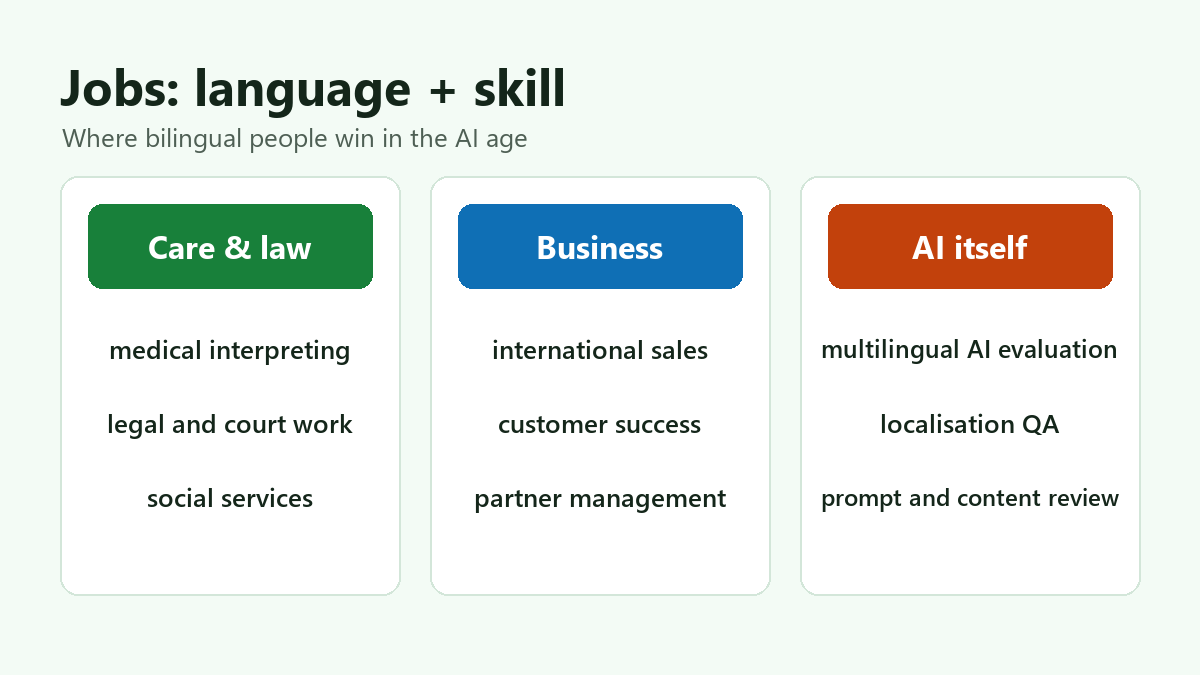
AI is reshaping language work, not deleting it. The pattern is simple: plain translation of plain text is being automated, while anything that needs trust, accountability or presence is not. Here's where a second language still gives you an edge.
1. Care, health and law
When the stakes are high, people want a person who is responsible for the words.
- Healthcare: nurses, doctors, pharmacists and receptionists who can speak with patients directly. Misunderstandings here are dangerous, and patients relax when they're understood.
- Legal and public services: court and police interpreting, immigration support, social work. These usually need certified humans, because someone has to stand behind the interpretation.
2. Business that runs on relationships
- International sales and partnerships: deals close over conversations, not documents.
- Customer success and support leads: AI answers the easy tickets; humans handle the angry, the confused and the high-value customers, in their language.
- Teams spread across countries: the person who can talk to both sides becomes the one everyone relies on.

3. Jobs AI is creating
AI systems need people who can judge their output in many languages:

- Multilingual AI evaluation: rating and correcting model answers in your language. AI companies and data firms regularly hire native and fluent speakers for this.
- Localisation review: checking machine-translated apps, games, websites and marketing so they sound natural and don't offend.
- Content and safety review: spotting harmful or misleading content in languages the reviewers' tools handle poorly.
4. Doors that open because you speak it
Some opportunities simply require the language:
- Moving countries. Canada's Express Entry gives extra points for French; Spain and Portugal ask for A2 in Spanish or Portuguese for citizenship.
- Studying abroad. German universities ask for TestDaF, DSH or a Goethe certificate; Japanese and Korean programmes often ask for JLPT or TOPIK.
- Working locally. In much of the world, the best jobs go to people who can work in the local language.
How to make yourself hireable
- Pair the language with a skill you already have. "Accountant who speaks German" beats "speaks German".
- Get a recognised certificate at the level employers ask for, often B2. It turns "I speak some" into a line on your CV.
- Practise speaking under pressure: interviews, calls and meetings. That's the part AI can't do for you.
Related: Why languages matter in the AI age · How many hours to B2.