
Numbers in German: how to count from 0 to 1,000
November 15, 2026 · Updated November 18, 2026

Numbers are some of the first words you need in German: prices, times, phone numbers, addresses. Learn the 19 below and the patterns that join them, and you can say any number up to a thousand.
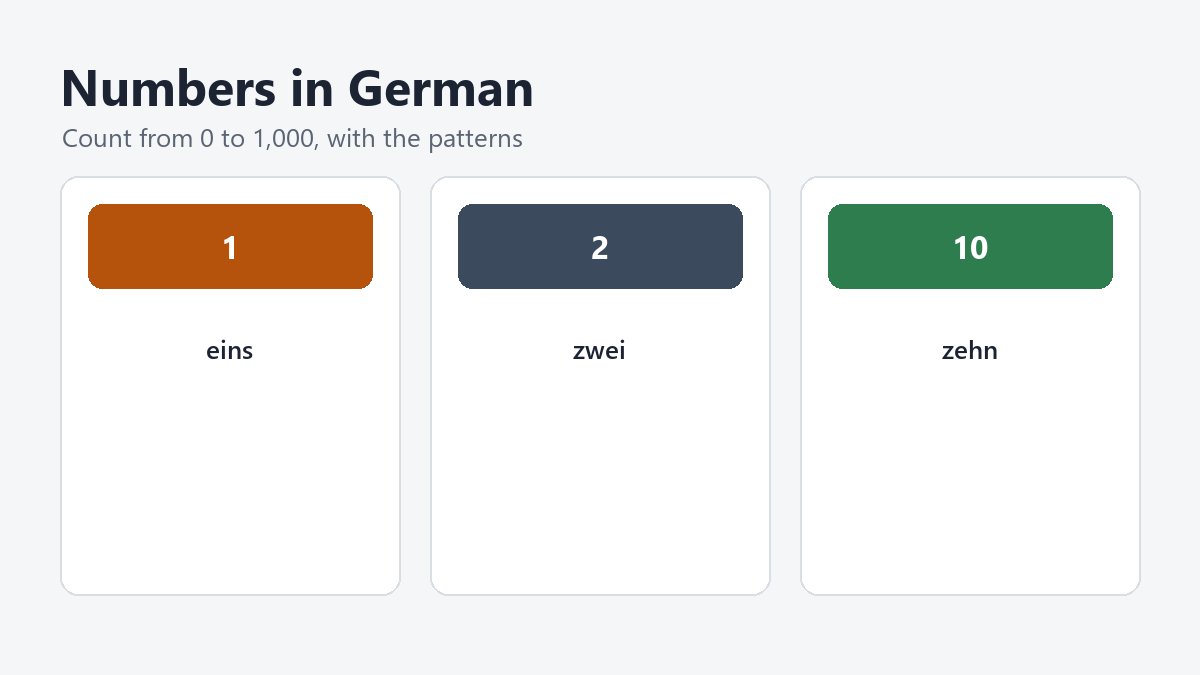
The numbers you need
| Number | German |
|---|---|
| 0 | null |
| 1 | eins |
| 2 | zwei |
| 3 | drei |
| 4 | vier |
| 5 | fünf |
| 6 | sechs |
| 7 | sieben |
| 8 | acht |
| 9 | neun |
| 10 | zehn |
| 11 | elf |
| 12 | zwölf |
| 20 | zwanzig |
| 21 | einundzwanzig |
| 30 | dreißig |
| 50 | fünfzig |
| 100 | hundert |
| 1,000 | tausend |
How the system works
- From 21 the units come first: einundzwanzig is one-and-twenty.
- Numbers under a million are written as one word: 345 is dreihundertfünfundvierzig.
- On the phone, people often say zwo instead of zwei so it isn't confused with drei.
- 30 is dreißig, with ß, not dreizig.

One more thing
German writes 1.000 for a thousand and 3,5 for three and a half.

Make them automatic
Knowing a number and hearing it fast are two different skills. Prices and phone numbers come at native speed, so practise both ways:
- Say them: read prices and times out loud in Repeat after me.
- Hear them: do listening exercises with the transcript hidden, and write the number you hear.
- Use them: in Talk, ask the tutor to play a shopkeeper and haggle over prices.
Learn German free on FluentSprout. See also: German travel phrases and how long it takes to learn German.