
Colours in German: the words and how to use them
November 15, 2026 · Updated November 18, 2026

Colours are some of the first describing words you'll use in German: clothes, cars, food, the sky. The words are easy; where they go and how they change is where learners slip.
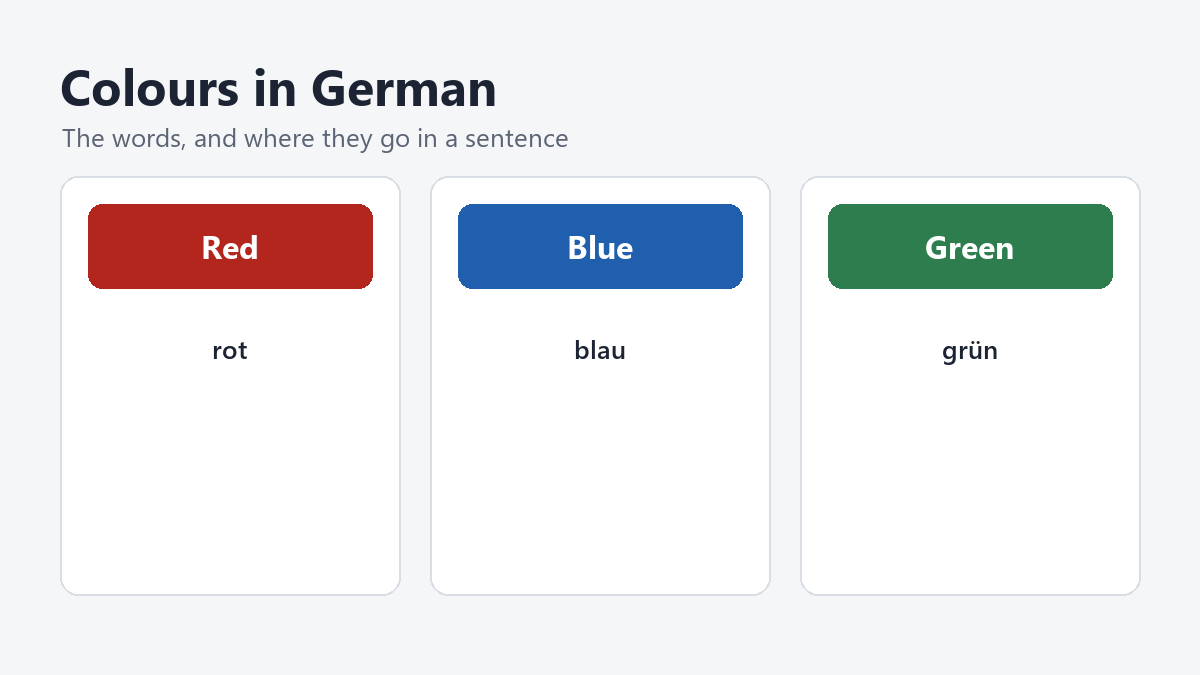
The colours
| English | German |
|---|---|
| red | rot |
| orange | orange |
| yellow | gelb |
| green | grün |
| blue | blau |
| purple | lila |
| pink | rosa |
| brown | braun |
| black | schwarz |
| white | weiß |
| grey | grau |
How to use them
- After sein, colours don't change: Das Auto ist rot.
- Before a noun they take adjective endings: ein rotes Auto, der rote Wagen.
- Lila, rosa and orange traditionally don't take endings in careful writing, though you'll hear ein oranges T-Shirt in speech.
- Light and dark go in front: hellblau (light blue), dunkelgrün (dark green).
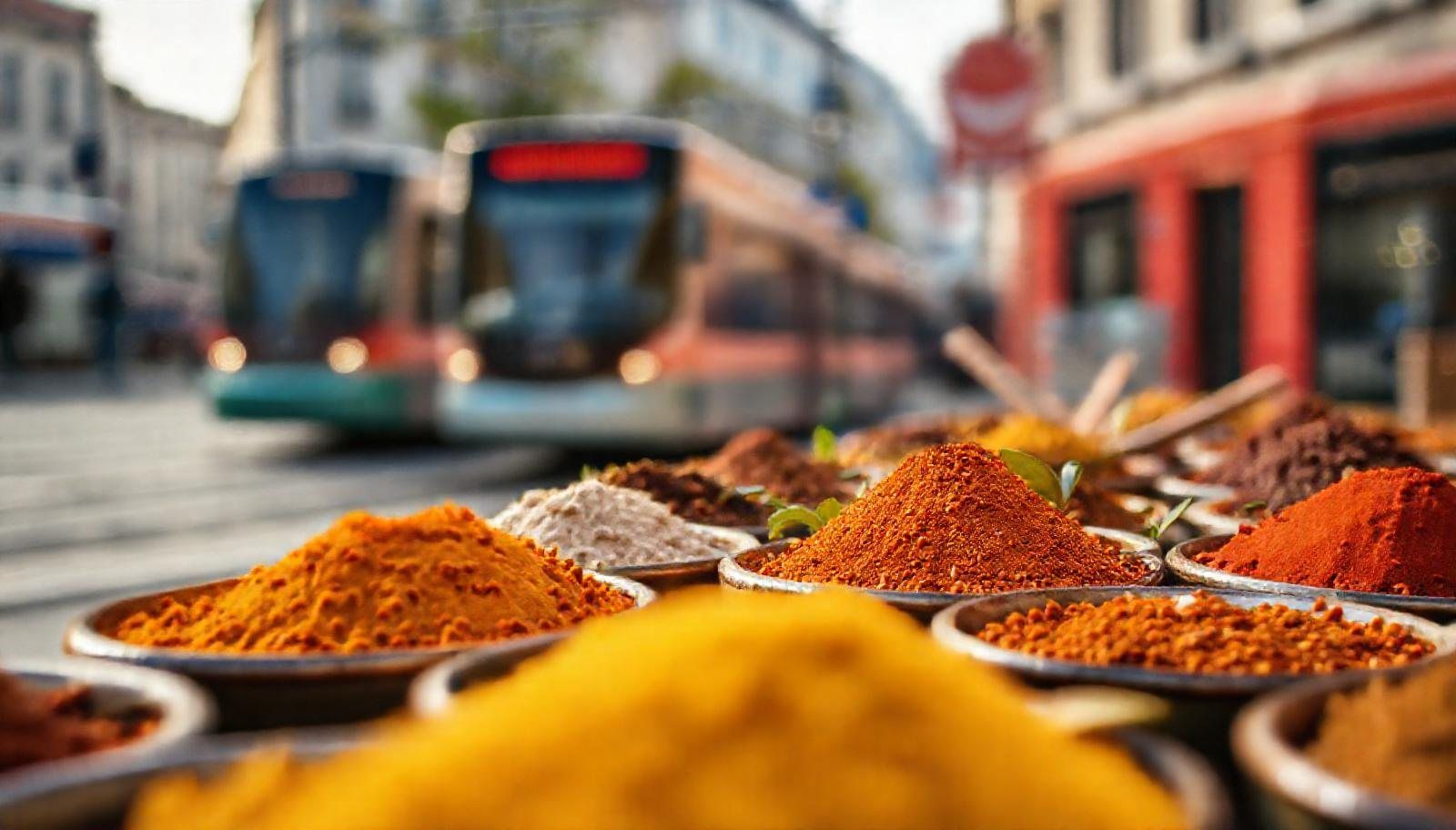
Example: Das blaue Hemd: The blue shirt.
Practise
Describe what you're wearing right now in German, out loud. Then ask FluentSprout's tutor in Talk to play a shop assistant and buy a shirt in a colour you choose: it'll correct the word order and endings as you go.
More German: numbers, days and months and introduce yourself.
Browse the German lessons or start free on FluentSprout.