
Days of the week and months in German
November 15, 2026 · Updated November 18, 2026

Days and months come up in every conversation about plans: when you're free, when you arrive, when your exam is. Here they are in German, with how to put them into a date.
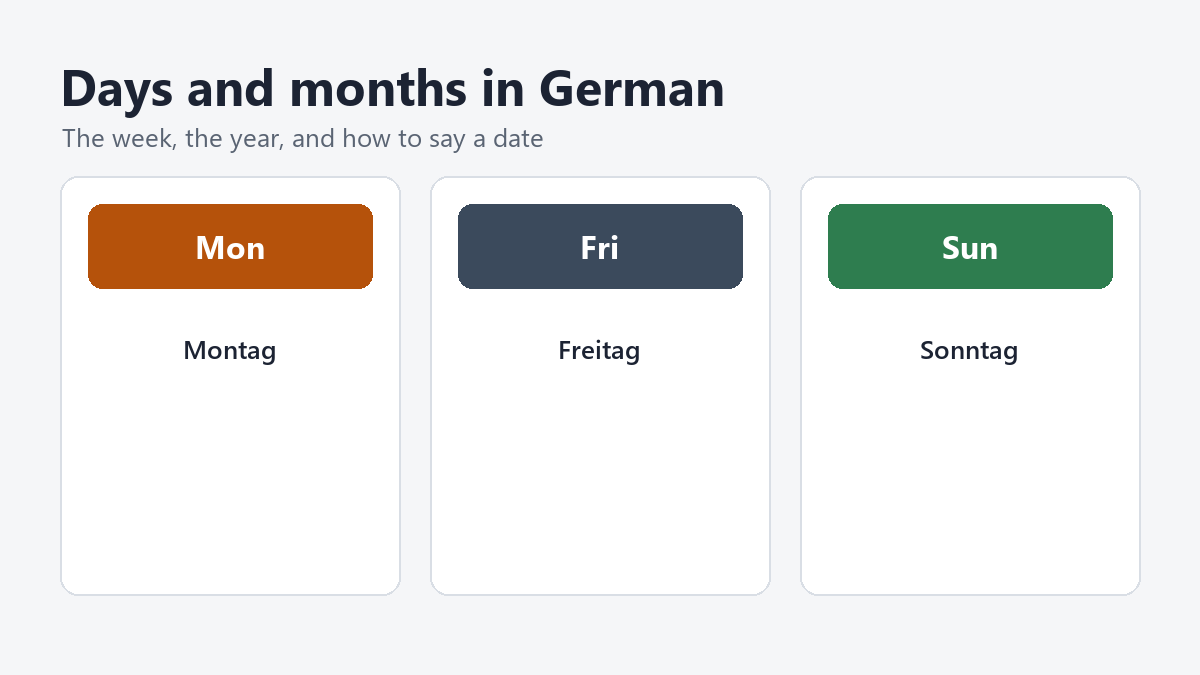
Days of the week
| English | German |
|---|---|
| Monday | Montag |
| Tuesday | Dienstag |
| Wednesday | Mittwoch |
| Thursday | Donnerstag |
| Friday | Freitag |
| Saturday | Samstag |
| Sunday | Sonntag |
Months
| English | German |
|---|---|
| January | Januar |
| February | Februar |
| March | März |
| April | April |
| May | Mai |
| June | Juni |
| July | Juli |
| August | August |
| September | September |
| October | Oktober |
| November | November |
| December | Dezember |

What to know
- Like all German nouns, days and months take a capital letter.
- All days are masculine: am Montag (on Monday). Add -s for habits: montags (on Mondays).
- Samstag is used everywhere; Sonnabend is also heard in northern and eastern Germany.
- In Austria, January is often Jänner.

Useful sentences
| German | Meaning |
|---|---|
| Welcher Tag ist heute? | What day is it today? |
| Heute ist Freitag | Today is Friday |
| Am 3. Oktober | On the 3rd of October |
| Bis Samstag! | See you on Saturday! |
Practise them out loud
Say the days in order, then out of order, then answer "what's the date today?" every morning in the language. In FluentSprout, ask the tutor in Talk to book an appointment with you: it's the fastest way to make days, dates and times automatic.
More German: numbers, travel phrases and how long it takes to learn.
Browse the German lessons or start free on FluentSprout.