
The human skills AI can't fake, and how learning a language builds them
November 18, 2026 · Updated November 18, 2026

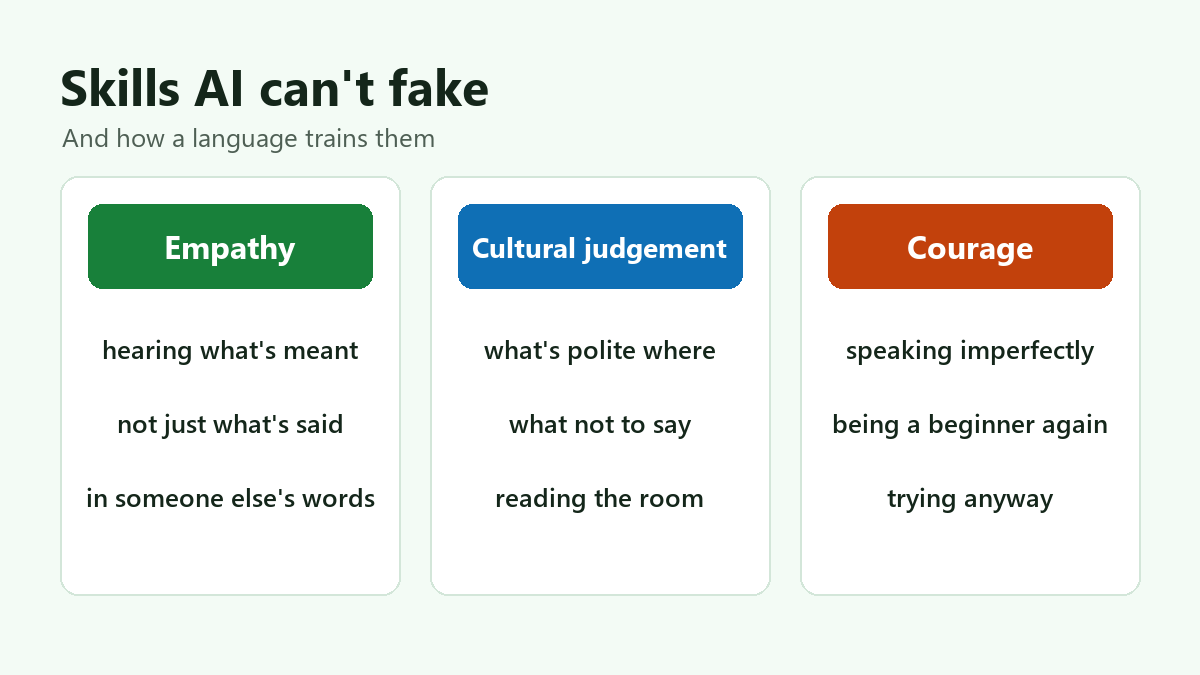
As AI takes over more of the routine work, the question for every career becomes: what can I do that a machine can't fake? The answers keep coming back to the same human skills, and learning a language happens to train all of them.
Empathy: understanding what people mean
In a new language you learn quickly that words aren't the whole message. You start listening for tone, context and what's left unsaid, because you have to. That habit, paying close attention to what someone actually means, carries over into every conversation, in any language.
Cultural judgement: reading the room
Every language comes with rules nobody writes down: how direct to be, when to use formal address, which topics are off-limits, how to say no politely. Learning them teaches you that "normal" is local. That's exactly the judgement AI lacks when it produces something technically correct and socially wrong.

Patience with not knowing
Language learning means sitting in confusion every day, understanding half a sentence and guessing the rest. People who get comfortable with that are better at new jobs, new tools and new situations, which is most of working life now.

The courage to be a beginner
Speaking a language you're bad at, out loud, in front of people, is uncomfortable. Doing it anyway builds a kind of confidence that's rare and valuable: being willing to try before you're perfect. In a world that keeps changing, adults who can be beginners again keep up.
Memory and focus
Learning vocabulary and grammar is steady, effortful practice for memory and attention. Research on whether language learning has lasting cognitive benefits is still debated, but the daily habit of focused practice is good training whatever the science settles on.
A skill that compounds
Unlike many tools that go out of date in a year, a language keeps paying off for decades: in work, travel, friendships and family. In an AI-heavy future, that kind of durable, human skill is worth investing in.
Also in this series: Why languages matter in the AI age · Jobs where a second language beats AI · Who checks the AI?