
Translation earbuds vs speaking the language: what gets lost in the gap
November 18, 2026 · Updated November 18, 2026

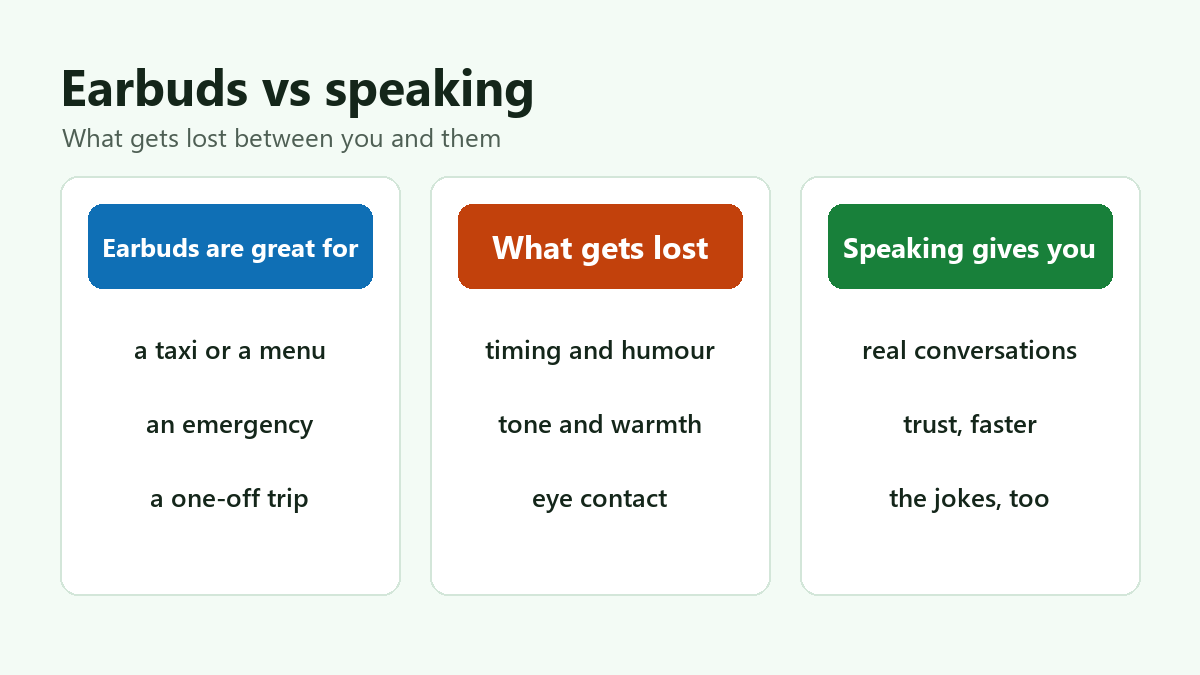
Live translation in your ears felt like science fiction not long ago. Now it's a product you can buy. For a taxi, a pharmacy or a menu, it's genuinely brilliant, and if that's all you need, use it.
But if you want to live somewhere, work with people or make friends, something important gets lost in the gap.
The gap is about two seconds, and it matters
Conversation runs on timing. Every exchange through a translator has a pause: you speak, the machine listens, then it talks. Small pauses add up to a conversation that never quite flows. People adjust by saying less, and simpler things.
Tone, humour and warmth get flattened
Translation tools are built to get the meaning across. They're much worse at irony, teasing, warmth, hesitation and politeness levels. A gentle joke can come out blunt; a careful refusal can sound rude. The words survive; the person doesn't always.
You stop looking at each other
With a device in the middle, both people watch the device. Eye contact, the nod that says "I get you", the laugh at the same moment: that's where trust is built, and it's the first thing to go.

People treat you differently when you try
Speaking someone's language, even badly, is a signal: I made an effort for you. Shopkeepers, neighbours, colleagues and in-laws respond to that in a way no earbud can earn on your behalf.
Use both, but know which is which
- Machines: for one-off, transactional moments and emergencies.
- Your own words: for anything that's a relationship: work, friends, family, community.
The good news is that you don't need to be fluent to cross the gap. A few hundred words and the confidence to use them out loud already change how people respond to you.
Also in this series: Why languages matter in the AI age · Jobs where a second language beats AI · Who checks the AI?